


Many glass manufacturing factories keep facing unstable melting temperature, short consumable part service life, frequent furnace damage and uneven finished product glossiness. Most production managers only blame raw materials or operating parameters, ignoring the core component that directly determines continuous operation stability: the molybdenum electrode. Poor-quality electrodes cause invisible loss day by day, raising maintenance costs, reducing output qualification rate and interrupting continuous production cycles. Choosing a reliable high-performance molybdenum electrode can fundamentally eliminate these long-standing hidden dangers that are easy to overlook in daily glass melting processes.
Unqualified molybdenum electrodes show no obvious faults in the early working stage, which makes plant workers misjudge product quality. Low-density molybdenum materials produce tiny cracks under high-temperature thermal shock, slowly dissolve into glass liquid, pollute glass clarity and bring internal bubble defects. Irregular impurity content also changes conductivity stability, leading to sudden voltage fluctuations and uncontrollable furnace temperature. These hidden problems cannot be detected by routine inspection, and only cause large-scale defective products after long-term high-temperature operation.
Long-term high temperature and corrosive glass liquid environment put extremely harsh requirements on electrode corrosion resistance and high-temperature strength. Ordinary molybdenum electrodes soften prematurely at continuous working temperature, deform slowly and shift installation position, destroying the orderly electric field distribution inside the melting furnace. Once the electric field deviates, melting efficiency drops sharply, energy consumption rises significantly, and furnace wall erosion accelerates greatly. Professional customized electrodes produced by Qingdao Jasmine Industrial Materials adopt refined smelting and precision forming technology to resist extreme working conditions stably.
Different glass types require completely matching electrode resistivity and density indicators. Soda-lime glass, borosilicate glass and special optical glass all have distinct corrosion characteristics and melting temperature ranges. Matching wrong electrode specifications will accelerate ablation speed, shorten replacement cycle and increase shutdown maintenance frequency. Frequent shutdown not only wastes a great deal of heat energy, but also damages furnace lining structure repeatedly, shortening the overall service life of the whole melting equipment.
Production cost control of glass factories is closely related to comprehensive durability of molybdenum electrodes. Many enterprises pursue low unit purchase price blindly, ignoring overall operation cost within the whole service cycle. Cheap inferior electrodes need frequent replacement, labor cost for maintenance rises continuously, defective product loss expands year by year, and unexpected production suspension causes greater economic losses. Practical production experience proves that high-purity dense molybdenum electrodes bring lower average daily consumption cost and more stable continuous production income.
Performance Comparison of Conventional Electrode & Premium Molybdenum Electrode
| Performance Indicator | Ordinary Molybdenum Electrode | High-Purity Refined Molybdenum Electrode |
|---|---|---|
| Molybdenum Purity | ≤99.8% | ≥99.95% |
| High-Temperature Softening Resistance | Poor, Easy Deformation | Excellent, Stable Shape Under 1600℃ |
| Corrosion Resistance to Molten Glass | Fast Ablation, Short Service Life | Slow Erosion, Ultra-Long Stable Operation |
| Internal Density Uniformity | Uneven, Easy To Crack | High Compactness, Resist Thermal Shock |
| Conductivity Stability | Fluctuate Greatly With Temperature | Stable And Consistent For Long Hours |
| Impact On Glass Quality | Easy To Cause Bubbles & Spots | No Impurity Pollution, High Transparency Finished Products |
Deep-seated problems ignored by most users include thermal matching between electrodes and furnace thermal expansion coefficient. Mismatched expansion parameters cause gap separation at joint parts during heating and cooling cycles, generating arc ablation and local overheating. Local high temperature burns electrode end quickly, spreads damage to surrounding accessories, and forms vicious cycle of frequent part replacement. Professional grade molybdenum electrodes adopt unified precision dimension design, fitting standard furnace structure perfectly and reducing joint failure rate greatly.
Another critical hidden trouble is oxidation loss of molybdenum electrodes in high-temperature air environment. Unprotected molybdenum reacts rapidly with oxygen at high temperature, forming volatile oxides and reducing effective electrode diameter continuously. As diameter shrinks, current density rises abnormally, temperature surges and ablation speed accelerates exponentially. Standard finished electrodes have optimized anti-oxidation structure and density structure, effectively slowing oxidation consumption and maintaining stable working size for a long time.
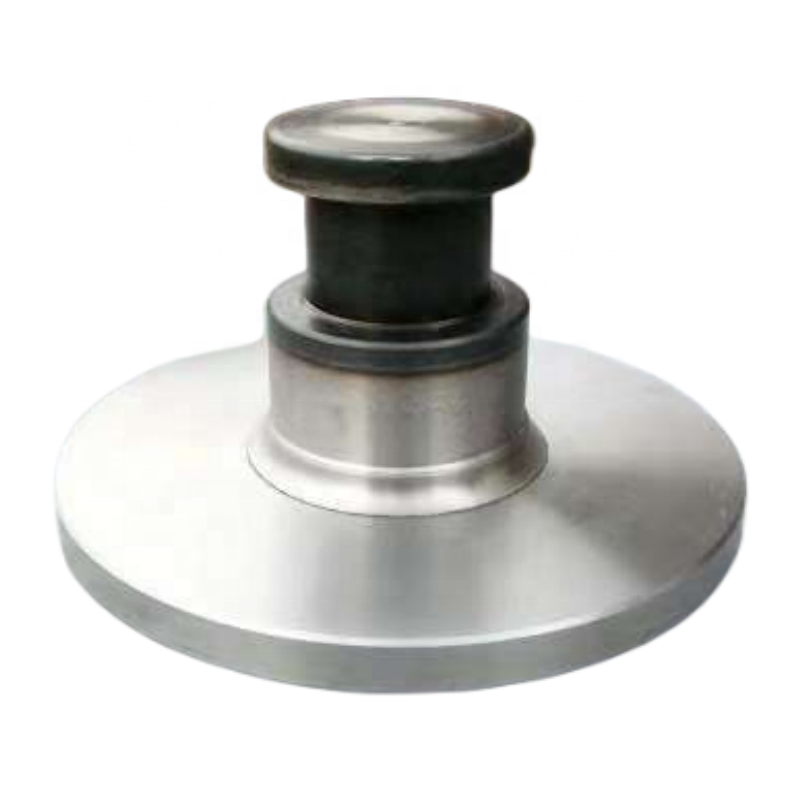
Actual on-site production feedback shows that qualified molybdenum electrodes can extend continuous melting production cycle by more than 40%. Stable electric heating state keeps glass liquid temperature uniform and consistent, improves product forming consistency, reduces grinding and reprocessing procedures, and improves overall production efficiency. At the same time, stable temperature reduces abnormal erosion of refractory materials, greatly prolonging maintenance interval of melting furnace.
For special high-temperature and special-corrosion glass melting scenarios, customized size and density molybdenum electrodes can adapt more complex working conditions. Strict material inspection, precision machining and integrity testing ensure each finished product meets industrial continuous production standards. Users do not need to adjust original equipment parameters repeatedly, directly install and use, quickly solve long-term quality instability and high consumption problems in glass melting production.
All practical application advantages come from strict raw material screening, vacuum sintering process and multi-stage quality inspection. Every batch of products passes density testing, resistivity detection, high-temperature simulation test and appearance precision inspection. Real production application experience verifies stable performance in various glass processing workshops, becoming reliable supporting consumables for long-term stable operation of glass melting furnaces.